


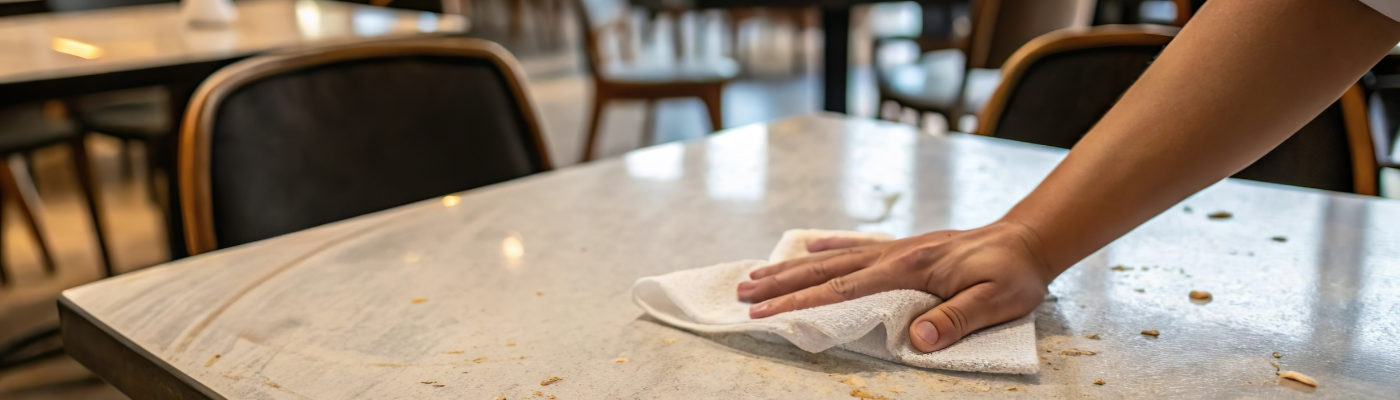
In the fast-paced world of hospitality, cleaning is constant and often instinctive. Surfaces are wiped, tables are reset, and service areas are refreshed throughout the day. But behind this routine lies an often-overlooked hygiene gap: the reusable cleaning cloth that has been used one too many times.
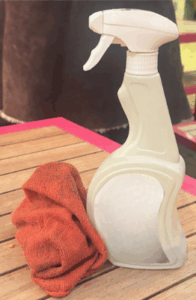
Reusable microfibre cloths are effective at trapping dirt, grease and bacteria – at first. The issue arises when they’re used repeatedly across multiple surfaces, sections and shifts. Once a cloth becomes damp and soiled, it can quickly turn into a vehicle for spreading contamination rather than removing it. Research has shown that cloths used for more than 2 hours can harbour significant bacterial growth, even when stored in sanitising solutions between uses. [1]
This concern isn’t new. The Food Standards Agency (FSA) is clear in its guidance: reusable cloths are not recommended in food environments due to the heightened risk of cross-contamination. If cloths are used, the FSA states they must be changed frequently and thoroughly washed and dried between tasks. [2] In busy restaurants, cafes, and hotel environments, maintaining this discipline consistently across all staff and shifts can be challenging.
The Data Behind the Problem
- A study reviewing cleaning cloths in food service found that 56% of reusable cloths tested positive for E. Coli or other hygiene indicator bacteria, even after being “cleaned” by staff.[3]
- Research published in the International Journal of Food Microbiology highlights that multi-use cloths can transfer up to 75% of bacteria from one surface to the next. [4]
- Bacteria thrive in damp conditions, and a cloth used across lunch and dinner service can sit at room temperature for hours – the ideal breeding environment for pathogens such as E. coli, Salmonella, and Staphylococcus aureus. [5]
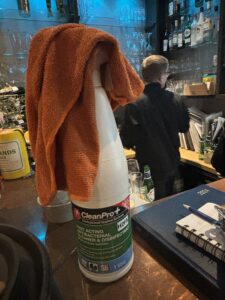
Why More Venues are Switching to Ready-to-Use Wipes
To close this hygiene gap, many hospitality operators are adopting single-use, food-contact-safe wipes as a more reliable alternative. Solutions like Protect 360° wipes offer measurable benefits:
- Fresh, uncontaminated wipe every time – reduces cross-contamination risk across high-touch surfaces.
- Food-safe formulation – suitable for use on front and back-of-house food contact surfaces.
- No laundering dependency – removes the operational burden of washing, drying, storing, rotating and eventually replacing cloths.
- More consistent staff compliance – makes hygiene processes simpler and easier to train and follow, especially during peak service times.
Raising the Standard of “Clean”
The cloth that has “done too many wipes” is rarely seen as a risk – but it undermines hygiene standards, brand reputation, and potentially guest safety. Replacing reusable cloths with ready-to-use wipes such as Protect 360° supports a stronger food safety culture, reduces cross-contamination risk, and enables staff to deliver consistently high standards of cleanliness.
Clean isn’t just about wiping surfaces – it’s about protecting customers, staff, and your brand. Switching to a controlled wipe system is one of the simplest, most effective ways to elevate hygiene across your venue.
[1] Moore, G. & Griffith, C. (2006). Foodborne Pathogens and Disease: “Evaluation of the efficiency of cleaning and disinfection procedures for food contact surfaces in catering operations.”
[2] Food Standards Agency (UK), “Safe Method: Cloths” & Food Safety Management Guidance (updated 2023)
[3] Hilton, A. & Austin, E. (2000). International Journal of Environmental Health Research: “The microbial contamination of dry and damp household cleaning cloths.”
[4] Scott, E. & Bloomfield, S. (1990). International Journal of Food Microbiology: “The survival and transfer of microbial contamination via cleaning cloths.”
[5] Public Health England, “Preventing Cross-Contamination in Kitchens” Guidance.
More Articles
Understanding ‘Contact Time’ and why it’s so important in the disinfection process
Our expert, Sarah Ashmore, discusses what contact time is and the critical role it has to play in the cleaning and disinfection process. [...]
Navigating the Waves of Seasonal Flu
Influenza, commonly known as the flu, is a viral infection notorious for wreaking havoc on the respiratory system. Every year, [...]
From Percentages to Precision: The Significance of Log Reduction in the World of Disinfection
In the battle against germs, the claim “Wipes out 99.9% of all germs!” might seem like the ultimate victory chant. [...]

What does sustainability mean to healthcare and the NHS?
As the world grapples with the increasing frequency of extreme weather events, there’s no denying that sustainability has become a [...]